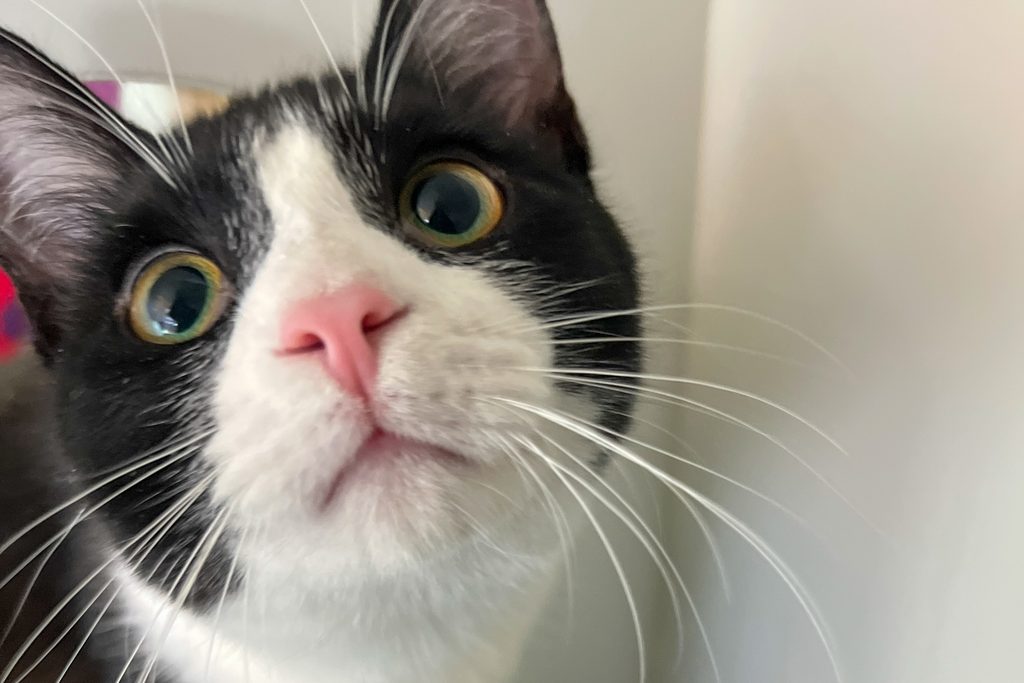
Understanding Cat Body Language: Signs Your Cat Is Happy, Stressed or Afraid
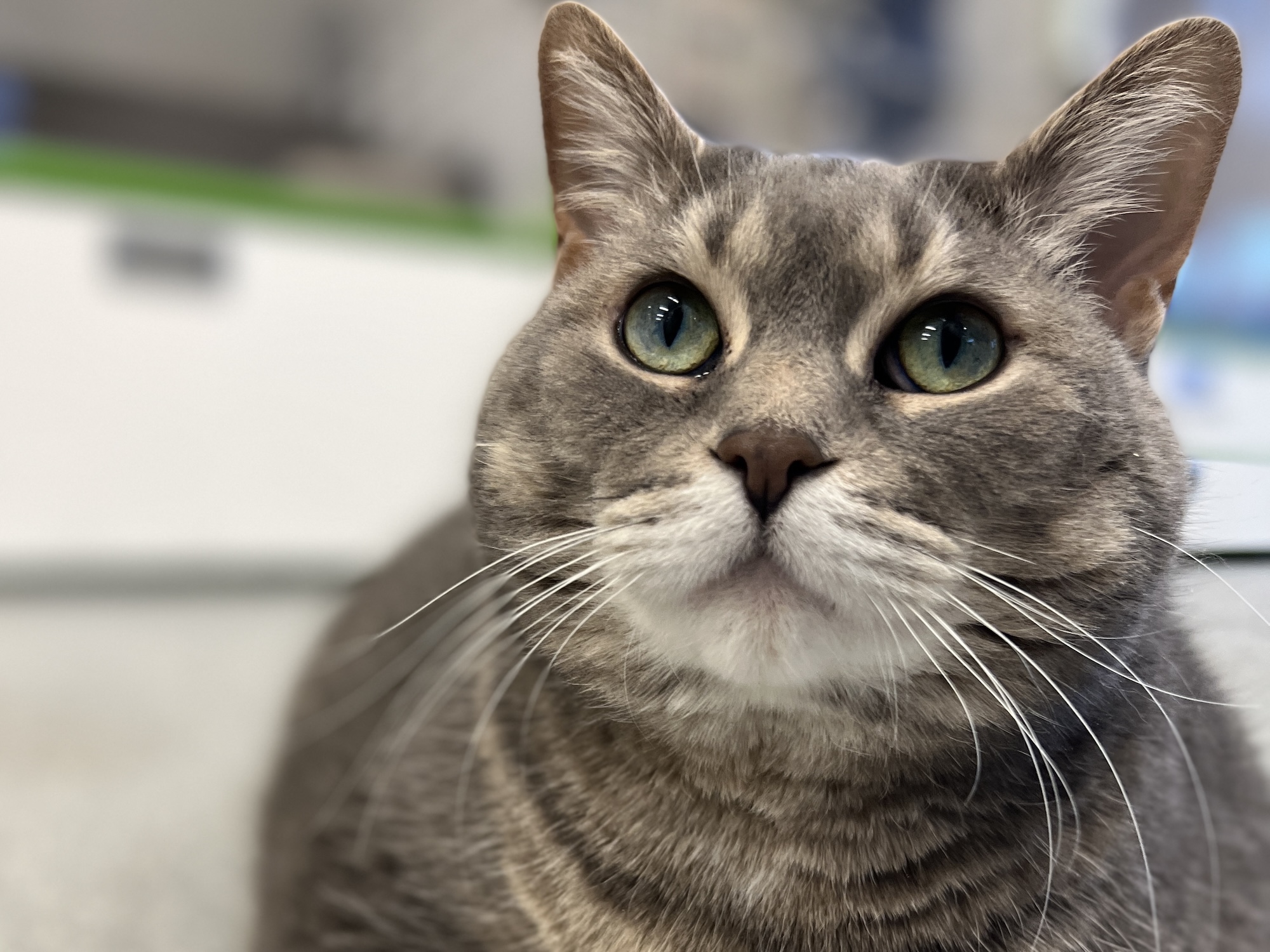
A cat walks into the room with their tail raised, rubs against your leg and settles beside you. A few moments later, their tail begins to twitch. Their ears turn slightly. When petting continues, they turn quickly and swat.
It can feel as though the cat changed their mind without warning. More often, the answer is simpler: they did change their mind—and their body communicated that change before the swat.
Cats speak through small shifts in posture, movement, facial expression and distance. Learning to notice those shifts can help you recognize when a cat feels secure, when an interaction is becoming too much and when they need space.
For a newly adopted cat, having those signals respected can be one of the first ways they learn that their new home is safe.
To understand what a cat may be communicating:
One feature does not tell the whole story. A purr, exposed belly, arched back or moving tail can have more than one meaning.
Cats communicate with their:
A comfortable cat often appears physically loose and can move naturally through the environment.
A worried cat may lower their body, retreat, hide or become still. A defensive cat may attempt to look larger, flatten their ears, hiss or strike.
Look for several signals appearing together.
Body language should always be interpreted in context.
Ask:
A cat with enlarged pupils may be playing in dim light, frightened by a visitor or highly aroused by a moving toy. The eyes alone cannot tell you which.
A comfortable cat may show:
A relaxed cat may lie on their side, tuck their paws comfortably underneath them or stretch out with part of the belly visible.
The important detail is that the body appears soft rather than tightly compressed or ready to move.
A cat who wants social contact may:
Rubbing and head bunting also allow cats to leave familiar scent behind. This can be part of creating a safe, recognizable environment.
Let the cat complete the approach. Avoid immediately reaching over their head or lifting them.
Play is closely connected to hunting behaviour.
A playful cat may:
During play, pupils may enlarge and the tail may move because the cat is highly aroused.
Use wand-style or tossable toys rather than hands or feet. Play that encourages a cat to bite hands can become painful and confusing as the cat grows.
End or reduce the intensity of play if the cat becomes unable to pause, redirects onto a person or shows signs of frustration.
Cats may express uncertainty through very subtle changes.
Possible early signs include:
If you notice these signals during an interaction, pause and give the cat the opportunity to leave.
A frightened cat may attempt to escape, hide, become very small or appear larger to discourage an approach.
Possible signs include:
A cat with an arched back and raised fur is not inviting contact. They are making themselves appear larger because they feel threatened.
Give the cat space and a clear escape route. Do not attempt to pick them up or comfort them through touch.
A cat who believes that they cannot escape may use defensive behaviour to create distance.
Warning signs can include:
Stop the interaction immediately. Do not punish, corner or reach toward the cat. Move away and allow them to recover.
Defensive behaviour describes what a cat did in a particular situation. It does not mean the cat is bad, spiteful or unable to form trusting relationships.
A cat’s tail can provide important information, but it should be read with the rest of the body.
An upright tail often appears during a friendly, confident approach. The tip may be slightly curved.
A low or tightly tucked tail may appear when a cat is uncertain or frightened. Consider the cat’s normal tail carriage and the rest of the body.
A small movement at the tip can appear when a cat is focused or becoming stimulated. During petting, increasing tail movement may indicate that the cat has had enough.
A rapidly sweeping or thumping tail commonly accompanies high arousal, frustration or irritation. Pause the interaction and give the cat space.
A puffed tail, especially with an arched body and raised fur, can indicate fear or defensive arousal. Do not approach.
A loosely wrapped tail can be part of a comfortable resting position. A tail held tightly against a tense, crouching body may reflect uncertainty.
Cats can rotate their ears toward sounds, so an ear changing direction does not always mean the cat is upset.
Look for patterns:
Compare the ear position with the eyes, tail and body tension.
A cat’s eyes change with lighting, health and emotion.
Soft eyelids and normal blinking often accompany relaxation.
A slow blink can occur when a cat feels calm and does not need to monitor you closely. You can respond by softening your gaze, turning your head slightly and blinking slowly.
Avoid staring directly at a cat, particularly an unfamiliar or worried one.
Pupils naturally enlarge in dim light. They may also enlarge during play, excitement, fear, pain or high arousal.
Pupils become narrower in bright light. Very narrow pupils can also appear during intense focus or arousal.
A fixed stare accompanied by a tense body can signal conflict or intense focus. Increase distance and avoid staring back.
Unequal pupil size or an unusual eye appearance requires veterinary attention.
Whisker position is subtle but can add information to the rest of the cat’s expression.
Depending on the situation:
Never trim a cat’s whiskers. They provide important sensory information about the surrounding environment.
Not always.
Cats may purr when they are:
A purring cat with a loose body, soft eyes and voluntary social contact may be comfortable.
A purring cat who is crouched, tense, hiding or behaving differently from normal may need space or veterinary attention.
Listen to the purr, but read the whole cat.
The belly is a vulnerable area. A cat who rolls over and exposes it may feel relaxed and safe—but that does not necessarily mean they want it touched.
Before reaching:
A cat who grabs, kicks, scratches or bites when their belly is touched is not being deceptive. The exposed belly and permission to touch it are two different messages.
Some cats enjoy brief contact but become uncomfortable or overstimulated when it continues.
Possible early signs include:
Stop at the earliest change rather than waiting for a swat or bite.
Shorter interactions can help you learn the cat’s preferences. Some cats enjoy contact around the cheeks and head but dislike touch along the back, belly, feet or tail.
When a cat approaches for attention:
The cat may ask for more by:
The cat may decline by:
Letting the cat leave teaches them that they do not need to scratch or bite to end an interaction.
Allow the cat to make the first move.
You can:
Do not pull a cat from a carrier, box, bed or hiding place to introduce yourself.
If the cat rubs against you, begin with a brief touch near the cheeks or head and then pause.
Children may interpret approaching, purring or rolling over as permission to pick up or cuddle a cat.
Teach children that a cat needs space when they:
Children should not approach a cat who is:
An adult should supervise interactions and ensure the cat always has an escape route.
Cats do not need to greet face to face to begin learning about one another.
During gradual introductions, signs that a cat may be ready to continue include:
Slow down if you notice:
Neutral behaviour is a successful step. Cats do not need to touch, play or sleep together.
A newly adopted cat may spend much of their time hidden. This can be a normal way of observing an unfamiliar environment.
As the cat settles, you may notice:
Do not force progress by removing hiding places or pulling the cat out. Provide safe options and allow confidence to grow at the individual cat’s pace.
Cats often conceal signs of illness. A behaviour change may be one of the first indications that something is wrong.
Contact a veterinarian if your cat:
Do not assume that a sudden behaviour change is simply part of the cat’s personality.
When reading a cat:
No. Cats may purr when relaxed, stressed, frightened, unwell or in pain. Read the purr together with the cat’s posture, face, location and usual behaviour.
Tail movement can indicate focus, excitement, frustration or irritation. During petting, increasing tail movement may mean the cat needs the interaction to stop.
Showing the belly can communicate trust and relaxation without inviting touch. Offer contact near the cheeks or head and let the cat choose whether to continue.
A slow blink commonly appears when a cat is relaxed and does not feel the need to watch you closely. You can respond with a soft gaze and slow blink of your own.
Pupils enlarge in low light and can also enlarge during play, fear, pain or high arousal. Consider the lighting, the cat’s complete body language and any other health changes.
Yes. Hiding provides security and is especially common after a move or stressful event. Contact a veterinarian if hiding is new, prolonged or accompanied by changes in eating, elimination, movement or health.
No. These behaviours communicate discomfort and a need for space. Stop the interaction and consider what caused the response.
Seek help when fear, conflict, scratching or biting is repeated, worsening or affecting safe care. Begin with a veterinarian to assess possible pain or illness, followed by an appropriately qualified behaviour professional.
Cats are often described as unpredictable when their earliest messages have simply been difficult for people to see.
A turned ear, twitching tail or brief pause may be all a cat needs to say, “That is enough for now.”
When that small signal is respected, the cat learns that they can leave without defending themselves. And when a cat knows they have a choice, approaching us can become a safer choice too.