Preparing Your Home for a New Bird
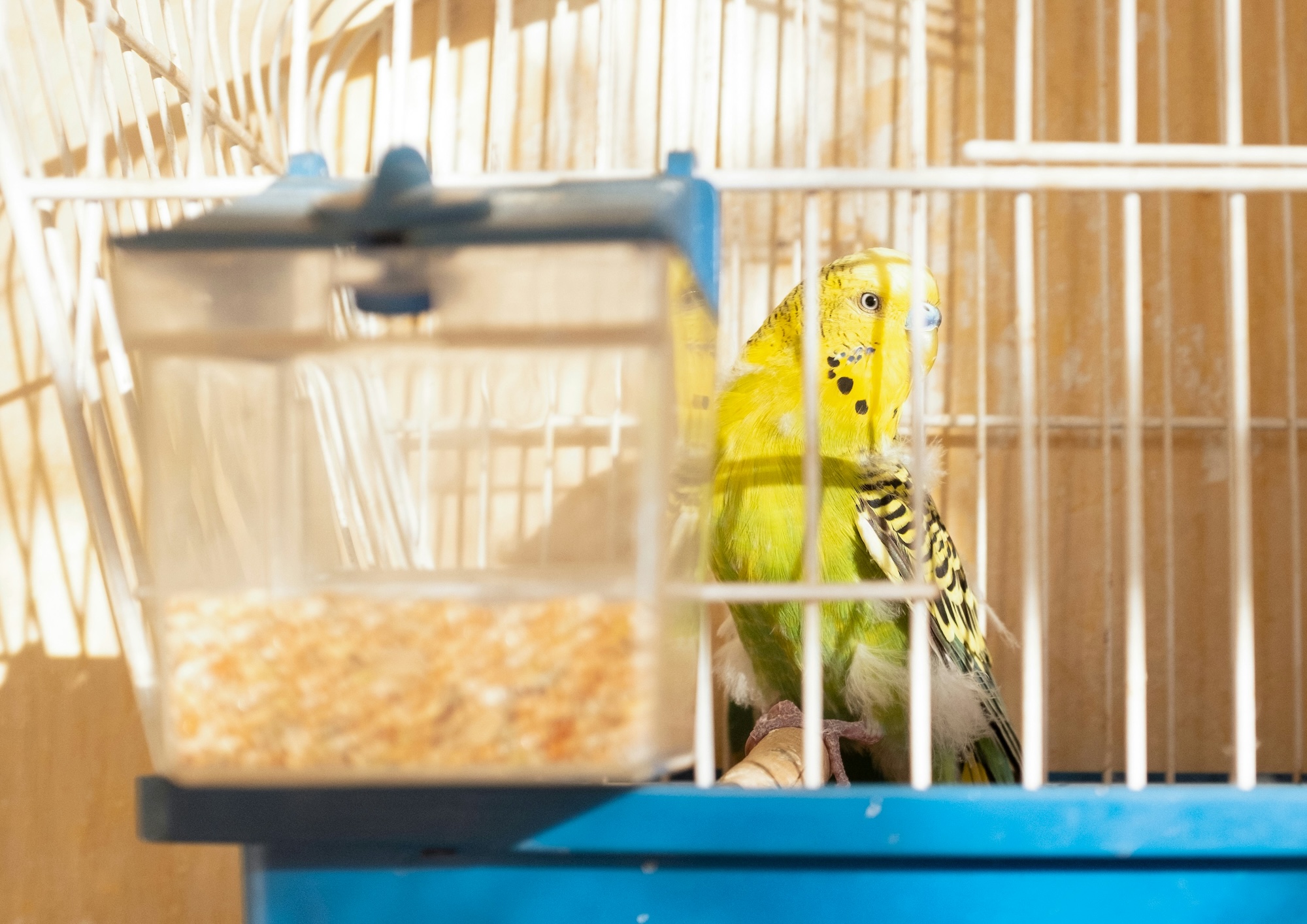
Before a newly adopted bird whistles, chatters or sings in their new home, they may be very quiet.
They may remain on one perch, watch every movement in the room or retreat to the safest corner of their habitat. For a bird arriving from a shelter or foster home, this new space is filled with unfamiliar people, sounds, routines and objects. Staying still and observing can be an important way of deciding whether it is safe.
A thoughtfully prepared home can make that decision easier. By setting up a secure habitat, removing hidden household hazards and giving your bird time to adjust, you create a place where curiosity can gradually replace uncertainty.
Before bringing home a bird:
The right setup depends on the bird. A finch, budgie, cockatiel, pigeon and large parrot will not have identical housing, dietary or social needs.
“Bird” describes thousands of species with very different bodies, behaviours and natural environments. Even commonly adopted companion birds vary widely in how they fly, climb, forage, communicate and interact with others.
Before purchasing supplies, ask the adoption team:
A bird’s previous experiences matter. Some shelter birds have lived closely with people, while others may not yet feel comfortable around hands. Some arrive with a favourite toy, perch or companion. Preserving familiar parts of their routine can provide reassurance during a period of significant change.
Birds are social and often enjoy being able to see and hear ordinary household activity. However, placing the habitat in the busiest or loudest part of the home can make rest difficult.
Choose an indoor location that is:
Placing one side of the habitat against a solid wall may help a bird feel less exposed. Avoid positioning the habitat in the centre of a room where activity approaches from every direction.
Do not place a bird in a basement, spare room or other isolated area simply to contain noise or mess. Companion birds need daily care, observation and appropriate social interaction.
Birds have highly efficient and sensitive respiratory systems. Fumes that appear mild—or are not noticeable at all—to people can be dangerous to them.
A bird should not be housed in or near the kitchen. Cooking smoke, overheated oils and hot appliances can all create risks.
Products containing polytetrafluoroethylene, commonly called PTFE and used in some non-stick coatings, can release highly toxic fumes when heated. These fumes may travel beyond the kitchen and can be fatal to birds.
Non-stick coatings may be found in:
Product labels may not always make the coating obvious. Check with the manufacturer when you are uncertain whether an item contains PTFE or related fluoropolymer coatings.
Keep the bird’s environment free from:
Moving a bird to another room may not provide adequate protection from fumes circulating through the home. Whenever possible, remove the hazardous product rather than relying on distance alone.
A bird’s habitat should allow much more than sitting on a perch. Your bird needs enough space to stretch both wings fully, move between perches and use toys without striking the cage bars.
When choosing a habitat, consider:
For many birds, width is at least as important as height. Small birds such as finches need room for horizontal flight, while parrots also benefit from climbing opportunities.
Before arrival, inspect the habitat for:
Use secure latches if the bird may be able to open simple doors. Parrots can be remarkably skilled at solving latches and dismantling objects.
Avoid overcrowding the habitat with toys and accessories. Your bird should still be able to move, stretch and flap comfortably.
A bird’s feet should not remain in exactly the same position all day. Several perches with different safe shapes, diameters and textures allow the feet to move more naturally.
A good perch arrangement may include:
Choose branches from bird-safe tree species that have not been exposed to pesticides, road contamination or chemicals.
Avoid relying entirely on smooth, identical dowel perches. Sandpaper perch covers can irritate a bird’s feet and should not be used as a substitute for nail care.
Arrange perches so droppings do not fall into food or water dishes. Make sure the bird’s tail will not continually rub against the bars while perched.
Ask the shelter what and how your bird currently eats. Birds may not recognize an unfamiliar food as edible, and an abrupt dietary change can result in a dangerous reduction in food intake.
Before bringing your bird home:
Seeds, pellets, vegetables, fruit and other foods do not play the same role in every species’ diet. Avoid using a generic bird-food mix without confirming that it meets the needs of your bird.
Never offer alcohol, caffeine, chocolate or avocado. Ask an avian veterinarian for a complete list of foods and plants that are unsafe for your particular species.
Birds are active animals who may spend much of their natural day searching for food, communicating, flying, climbing, chewing or manipulating objects.
Enrichment can give them safe opportunities to use those abilities.
Depending on the species, provide:
Inspect every toy for small gaps, loose parts, sharp edges and fibres that could trap a toe, foot, beak or neck.
New objects can be frightening to some birds. Rather than placing several unfamiliar toys in the habitat at once, let your bird observe them from a comfortable distance. Introduce new items gradually and watch the bird’s response.
Mirrors should be used cautiously. Some birds ignore or enjoy them, while others become distressed, territorial or overly focused on their reflection.
A cage is not a bird’s entire world. Birds need regular opportunities for movement and, for flighted birds, safe flight appropriate to their health and species.
Before opening the cage door, bird-proof the entire room.
Never allow a companion bird to fly outdoors unless they are inside a secure enclosure designed for that purpose.
A bird may initially panic in an unfamiliar room. Introduce new spaces gradually rather than giving immediate access to the entire home.
Birds can fall into water and may be unable to climb out. Before allowing free movement, close toilet lids and cover or empty:
A bird explores with their beak. Anything within reach may be tasted, pulled apart or swallowed.
Remove access to:
Do not assume that an item is safe because it is labelled natural. Materials can still contain toxins, dyes, pesticides, mould or dangerous fibres.
Ask an avian veterinarian before using homemade toys or natural materials when you are unsure.
Many birds are highly social, but that does not mean unfamiliar birds can simply be placed together.
If you are adopting a bonded pair or group, ask whether they should remain in the same habitat and how much space they require. Provide enough perches, food stations and resting areas so one bird cannot control every resource.
If you already have a bird at home:
Birds may enjoy communicating from separate habitats without wanting close physical contact. Watch their behaviour and allow each bird to move away from the other.
Cats, dogs and ferrets should not have direct contact with a bird. A quick paw strike, bite or moment of play can cause life-threatening injury.
Even when separated by cage bars, a predator’s close attention can be frightening.
Before your bird arrives:
Never rely on supervision alone to make direct interaction safe.
Birds need a predictable period of quiet and darkness. Many companion birds benefit from approximately 10 to 12 hours of uninterrupted sleep, although individual and species needs vary.
Create a sleep routine that includes:
Some birds sleep comfortably with a breathable cage cover, while others become frightened when covered. Ask about your bird’s existing routine before introducing one.
A separate sleep cage may work in some homes, but moving between cages can be stressful for a newly adopted bird. Allow time for trust and training before making unnecessary changes.
Birds can be wonderful family companions, but adults remain responsible for their care, safety and veterinary needs.
Teach children to:
Handling should always happen at the bird’s pace. A bird who is not ready to step onto a hand may be more comfortable stepping onto a handheld perch.
Birds communicate. They may call at sunrise, respond to household sounds or become especially vocal at certain times of day. Even small birds can produce more sound than new guardians expect.
Birds also scatter food, shred materials, splash water and release feathers and feather dust.
Prepare for daily maintenance by having:
Avoid punishing a bird for normal vocalizing or mess. Instead, learn what is typical for the species and build cleaning and enrichment into the household routine.
Not every veterinary clinic treats birds. Locate a veterinarian with avian experience before your bird comes home, and ask when the first examination should be scheduled.
Birds may hide signs of illness, so small changes can be significant. Learn what is normal for your individual bird, including:
Contact a veterinarian promptly if your bird shows a concerning change. Difficulty breathing, open-mouth breathing, pronounced tail movement with each breath, weakness, collapse or inability to perch require urgent veterinary attention.
Transport your bird in a secure, well-ventilated carrier appropriate to their size. The carrier should provide stable footing and should not contain swinging toys or heavy objects that could cause injury during travel.
For the journey:
Once home, take the carrier into a closed room before opening it. Allow the bird to enter the prepared habitat calmly rather than chasing or grabbing them.
Your new bird may need time to eat, explore or vocalize in your presence. Quiet observation is often more helpful than immediate handling.
During the first several days:
Trust is not measured by how quickly a bird steps onto a hand. A bird who begins eating, preening, exploring or resting comfortably in your presence may already be showing meaningful progress.
Before your bird arrives, confirm that:
Place the habitat in a comfortable indoor area where the bird can observe some household activity without being overwhelmed. Keep it away from kitchens, drafts, heating vents, direct sunlight, smoke, aerosols and strong fragrances. Providing a solid wall behind part of the habitat may help the bird feel secure.
No. Kitchens expose birds to cooking smoke, hot surfaces, boiling water and potentially toxic fumes from heated non-stick coatings. Airborne fumes can travel, so removing hazardous products from the home may be necessary even when the bird lives in another room.
The habitat should allow the bird to fully extend and flap both wings, move between perches and use enrichment without touching the bars. Birds who spend more time inside require more space. The appropriate dimensions and bar spacing depend on the bird’s species, size, wingspan and social group.
Your bird should have opportunities to forage, chew, climb and explore, but avoid filling the habitat with unfamiliar items. Some birds are cautious around new objects. Begin with familiar enrichment when possible and introduce new toys gradually.
Some birds rest well with a breathable cage cover, while others find it frightening. Ask what the bird is accustomed to and make sure any cover allows adequate ventilation. A quiet, predictable and darkened sleep environment is more important than the cover itself.
Birds should not have direct contact with cats, dogs or ferrets. Even a friendly animal can cause a severe injury in seconds. Keep other pets out of the room during handling and free-flight time.
Wing clipping does not make an unsafe room safe and can prevent a bird from performing natural flight behaviour. Prepare a secure indoor flight area, manage doors and windows carefully and ask an avian veterinarian or qualified bird behaviour professional for species-specific guidance.
Birds can become valued family companions, but they require knowledgeable adult care. They can be delicate, easily frightened, long-lived, noisy and expensive to treat medically. Children should interact only with close adult supervision.
A newly adopted bird may not reveal their full personality right away. The first signs of comfort may be quiet ones: eating while you are nearby, investigating a toy, preening on a favourite perch or choosing to move a little closer.
A safe home gives those moments room to happen. With thoughtful preparation, predictable care and respect for the bird’s pace, an unfamiliar place can gradually become somewhere they recognize as their own.
The guidance reflects current recommendations from the Association of Avian Veterinarians’ bird-owner resources, the RSPCA’s bird housing and environment guide, the RSPCA’s bird enrichment guidance and veterinary guidance on PTFE poisoning in birds.